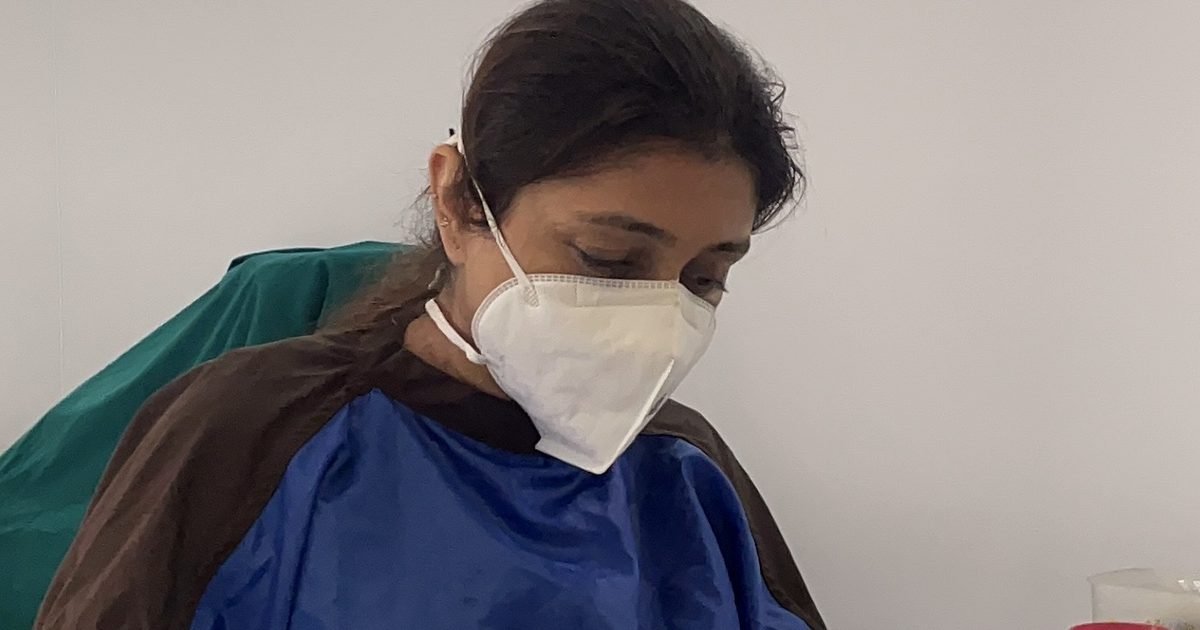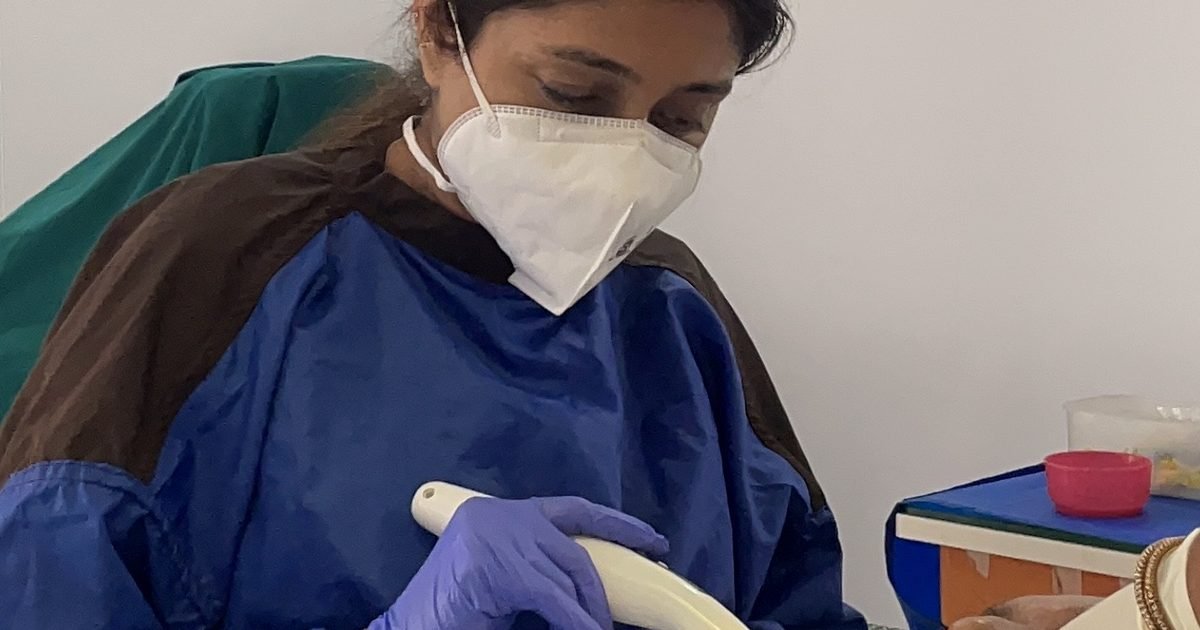


More adults than ever are straightening their teeth, before a wedding, for confidence in meetings, or simply because it never happened in childhood. The first question is almost always the same: braces or clear aligners? Both work well when used for the right case. The honest answer depends on your teeth, your discipline and your budget.
A reassurance before the comparison: age itself is rarely the barrier. If your gums and bone are healthy, teeth can be moved at 25 or at 55, the biology of tooth movement keeps working throughout adult life. As a rule of thumb, aligners win on appearance and convenience, while braces win on control for complex movements and on not depending on your willpower.
How each option moves your teeth
Braces are small brackets bonded to the teeth, connected by a wire that your orthodontist adjusts every few weeks. They work round the clock, you cannot take them off, and they give fine control over every type of tooth movement, including rotating teeth and correcting how your bite meets.
Clear aligners are a series of transparent, removable trays made from digital scans of your mouth. Each set nudges the teeth a fraction of a millimetre, and you move to the next set roughly every one to two weeks. Small tooth-coloured attachments are usually bonded to a few teeth to help the trays grip and push where needed.
Where clear aligners genuinely shine
Aligners are hard to notice at conversation distance, which matters for client-facing work. You remove them to eat, so there are no food restrictions, and brushing and flossing stay normal, a real advantage for gum health during treatment. Comfort is generally better too, with no wires or brackets to rub the cheeks, and review visits are often quicker.
Modern aligner systems also let you preview the planned movement digitally before you begin. Treat that animation as a helpful simulation rather than a promise, real teeth do not always follow the software exactly, and mid-course corrections with fresh trays are common and completely normal.
Where braces still win
For complex problems, severely rotated teeth, large bite corrections, teeth that must move vertically, braces give the orthodontist more control, and some cases simply finish better with them. Braces also cannot be forgotten in a drawer: if an aligner is out of your mouth, treatment is paused, while braces keep working whether you are motivated that week or not. Treatment time is broadly similar for comparable cases, often somewhere between one and two years, so neither option is a reliable shortcut.
Cost is case-dependent, but conventional braces are usually the more economical route in India, while aligner treatment from established systems typically costs more. Ask for a written estimate for both options for your specific case before you decide, seeing the comparison on paper is often clarifying.
Home food, chai and festival sweets, the practical bit
Neither option lives comfortably with the way most of us actually eat. With fixed braces, the trouble is anything hard or sticky, and an Indian kitchen has plenty of both. Chikki and gajak, laddoos with whole nuts, sugarcane, chewing ice at the end of a cold drink, and the habit of biting straight into an apple or a hard crust with the front teeth. Cleaning takes longer too, because turmeric coloured gravies and soft rice settle around brackets in a way they never did around bare teeth. None of this makes braces the wrong choice. It just means the first fortnight involves relearning how you eat, and being caught out at a wedding or a festival lunch is normal rather than a failure.
Aligners move the problem rather than removing it, and it lands hardest on the days when eating has no shape. A fasting day where the one proper meal comes late, a wedding lunch that runs for hours, a festival week where something sweet is handed to you every time you walk into a room, these are the days when the trays spend more of the day in a pocket than in the mouth. Nobody notices at the time. It shows up later, when a tray that should slip on stops seating the way it did. The trays themselves are the other quiet cost, because one wrapped in a paper napkin at a family lunch is one that leaves with the plates. So decide in advance which hours of a long day are eating hours, carry the case rather than a napkin, and let the rest of the day be tray time whatever is being offered.
The discipline question, be honest with yourself
Aligners only work if they are on your teeth for about 20 to 22 hours a day, every day, for months. They come out for meals and for cleaning, and for nothing else. If you snack frequently, sip many cups of chai or coffee through the day, or already suspect you will forget the trays, braces may quietly be the better choice. There is no shame in that, it is simply matching the tool to the person.
Aligners also need a small routine of their own: rinse the trays whenever you remove them, clean them with a soft brush and plain soap (hot water warps them), and drink only plain water while they are in, because tea, coffee and cold drinks stain the plastic and trap sugar against your teeth.
Questions to settle before you choose
A good consultation should answer these clearly:
- Is my case mild, moderate or complex?
- Would both options give an equally good result?
- How many months will each option take?
- What happens if I lose or break an aligner?
- How often will I need review visits?
- What does each option cost, in writing?
- Which retainers will I need afterwards?
One more thing to settle early: gum health comes first. Any gum disease must be treated before tooth movement begins, because moving teeth through inflamed gums and bone can speed up damage instead of fixing it.
Whichever you choose, retention is forever
Teeth have memory. After braces or aligners, they drift back towards their old positions unless retainers hold them, worn nightly at first, then a few nights a week, essentially long-term. Budget for retainers and take them seriously; relapse is the most common heartbreak in adult orthodontics.
If you are weighing braces against aligners, the practical first step is an assessment of your bite and gum health. Our dental team at Prudent International Health Clinic in Viman Nagar, Pune, open all 7 days, 9 AM to 9 PM, can lay out both options for your case, with honest pros and cons and a written estimate for each.